Requiem para un Alcaraván
Lukas Avendaño
(Mexico)
18 October 2025 | 12.00pm — 1.00pm
£12 | £8 (Concession)
Recommended for age 18+
The Boardwalk (Directions)

Closed Captions
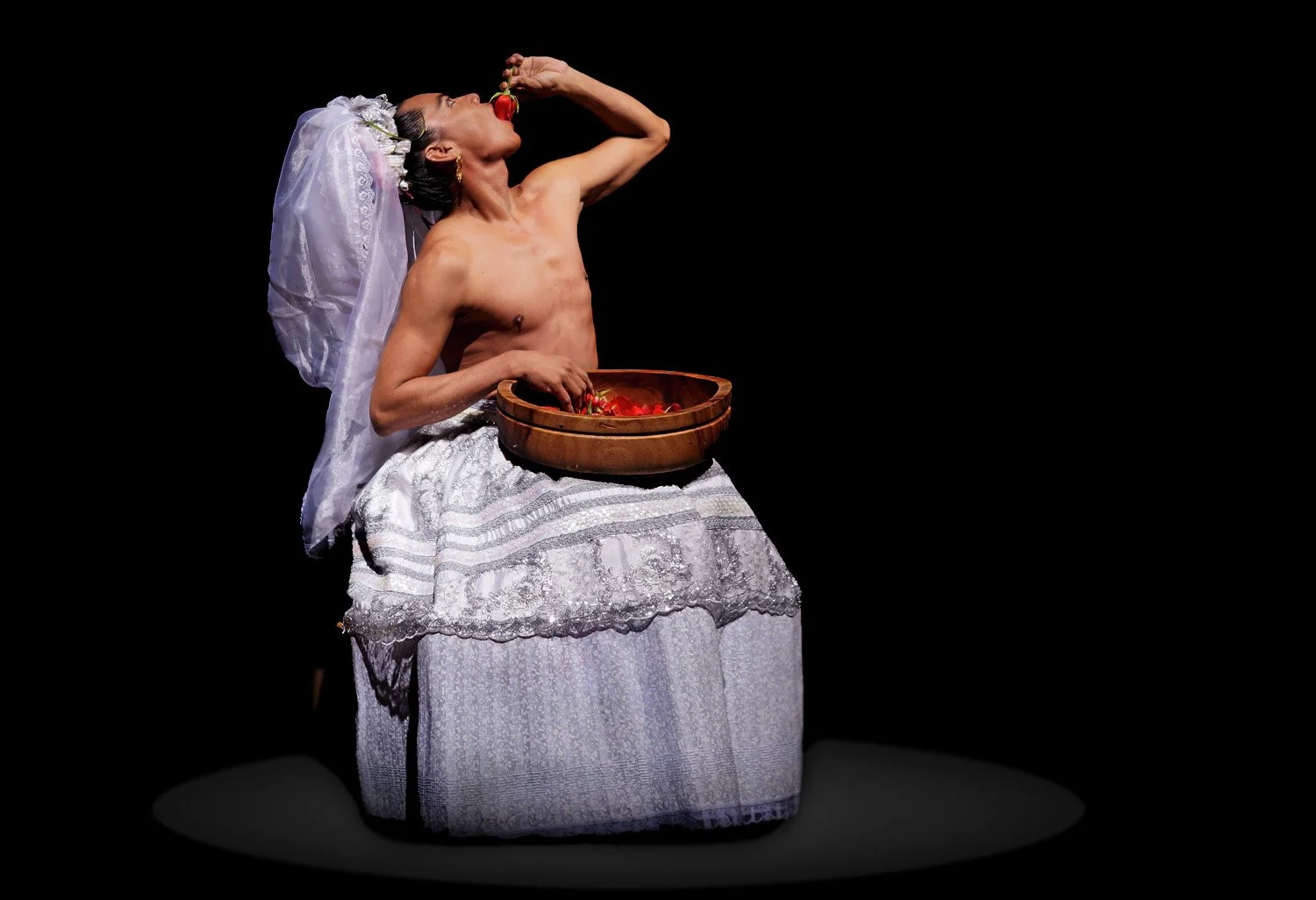
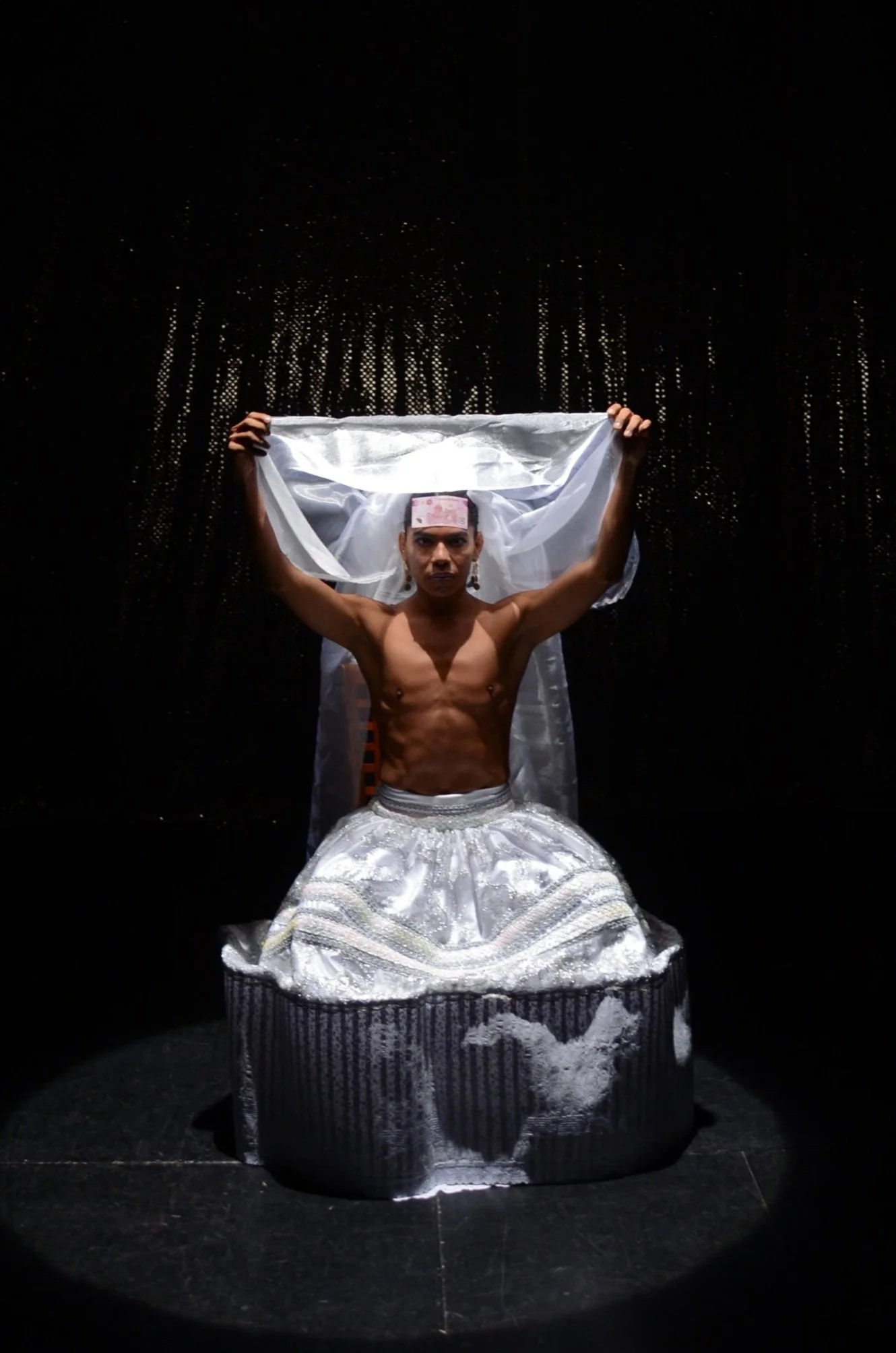
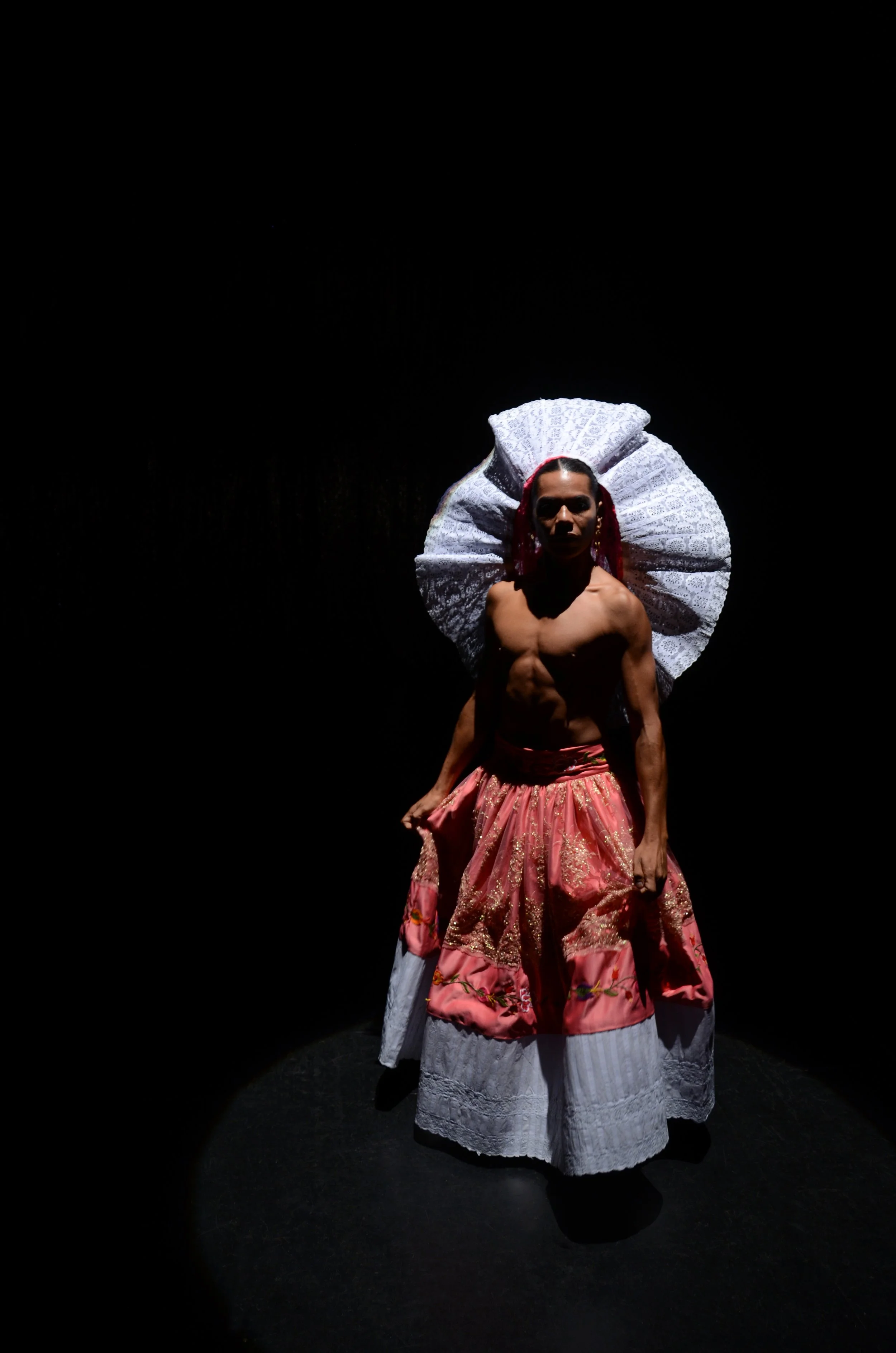
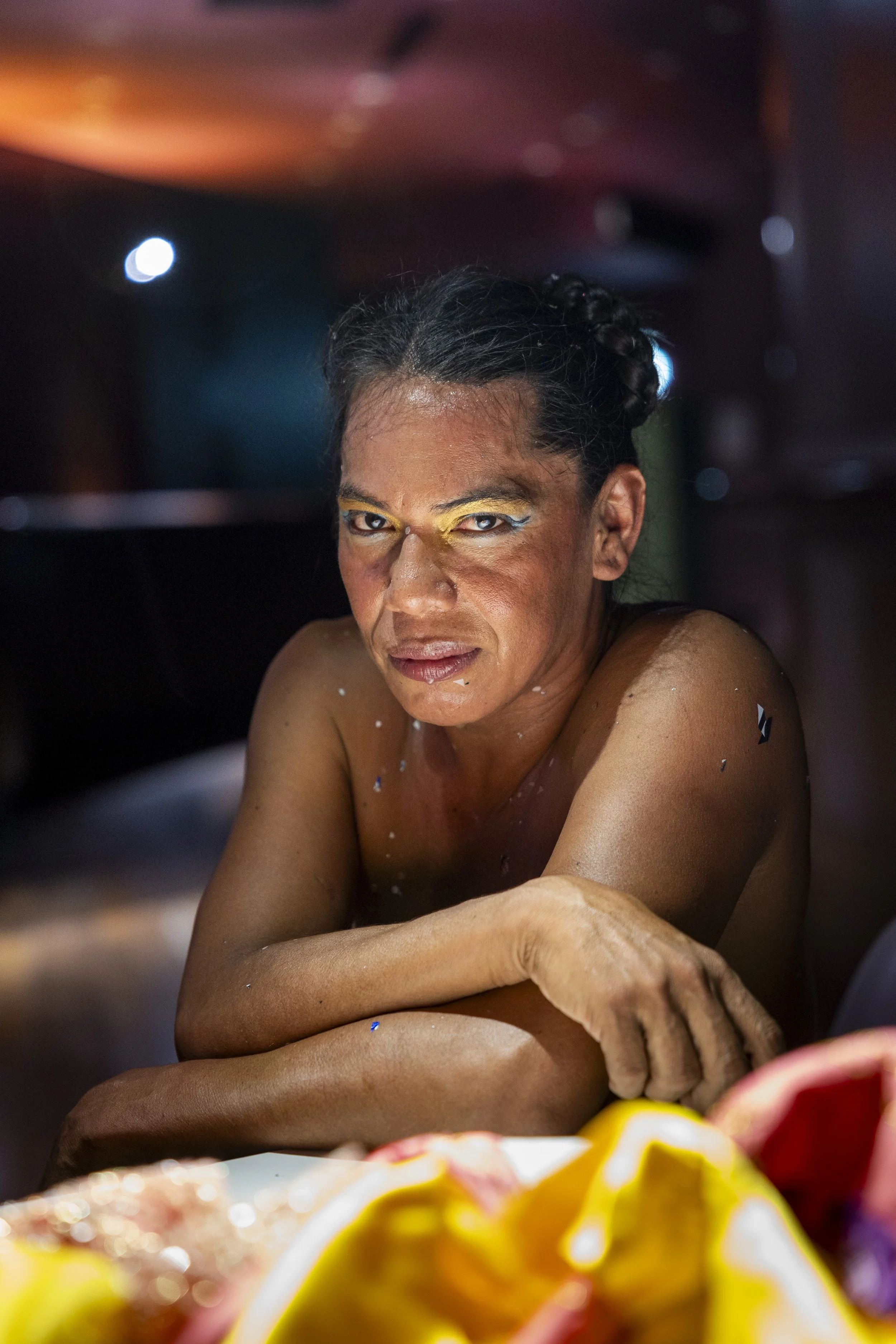
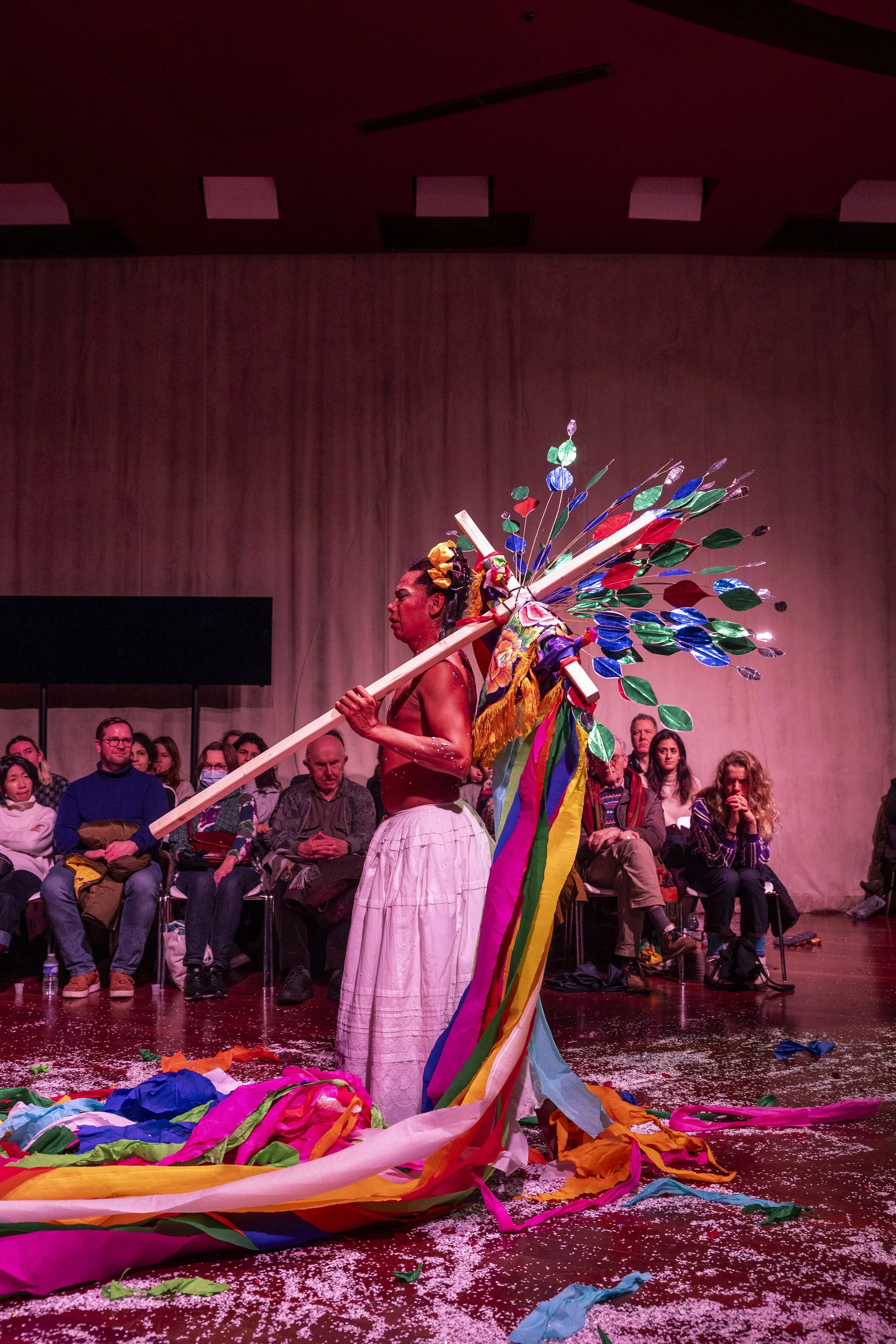
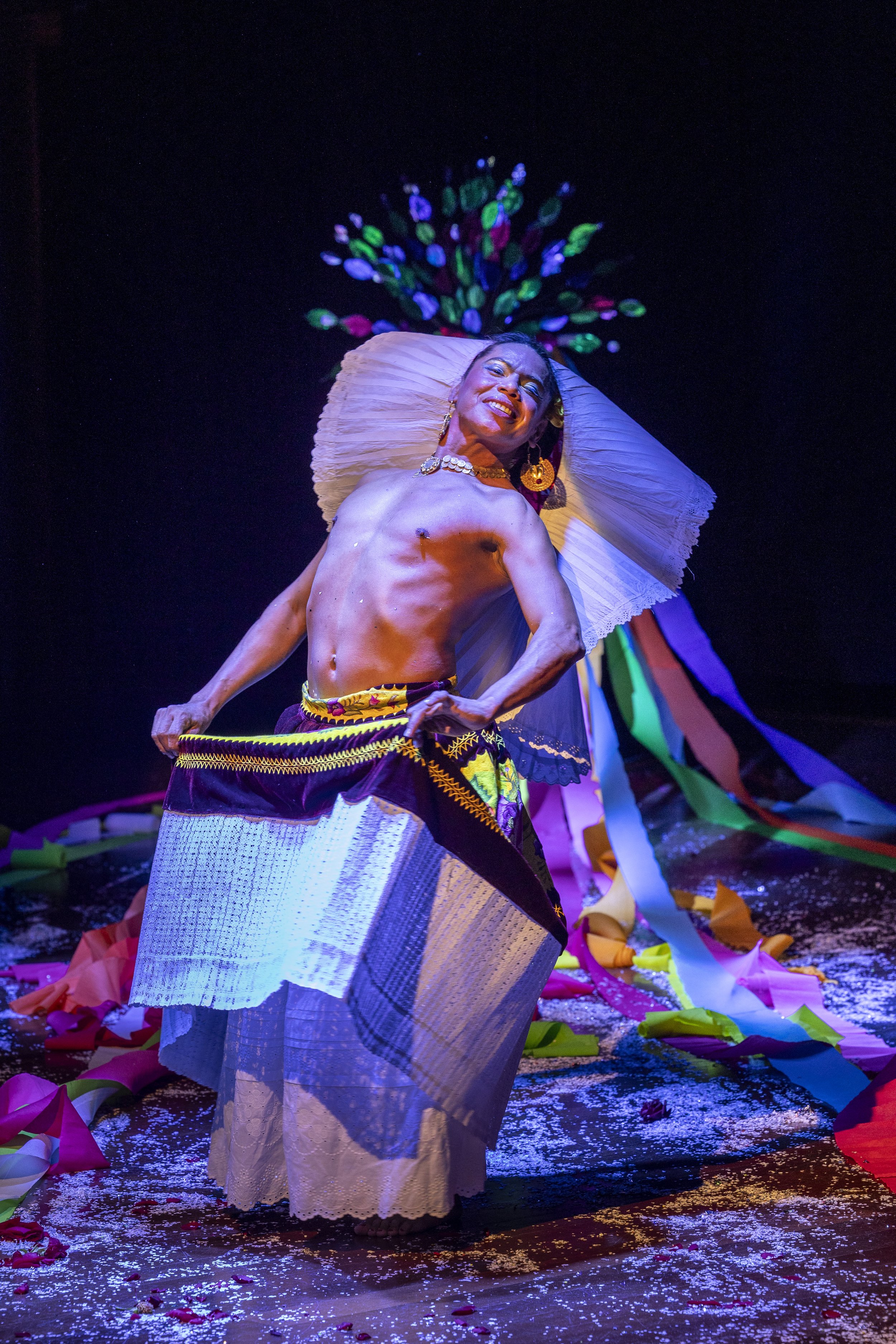
Requiem for an Alcaraván is a performative dance rooted in the figure of the muxhe, or man-woman, a term that carries specific cultural meaning within Zapotec tradition. Through the concept of muxheidad, Zapotec culture holds space for gender expressions and same-sex relationships that both coexist with and disrupt patriarchal and binary structures, though not without contradiction.
A muxhe is a man who assumes roles culturally associated with women, in labour, love, care and sex. Muxheidad is both a veiled social recognition and celebration of transgression: sanctioned and stigmatised.
In Requiem for an Alcaraván, the muxhe dances and invites the spectator to participate in traditional female rites of passage: the wedding, la mayordomía, la curandera rezandera, the mourning. The performance culminates in a transformation: as the dancer embodies the alcaraván or berelele (Burhinus oedicnemus), a local bird associated with metamorphosis. In some versions of the bird's myth, the male alcaraván, once he mates, is sacrificed by the female - a symbolic closing of a cycle.
Double-Bill Audience Bus 🚌
Take the Audience Bus after the performance that will take you from The Boardwalk venue to Platform Easterhouse so you can catch Doris Uhlich’s Come Back Again.
Access Notes
This performance is spoken in Spanish with Closed Captions in English.
Sensory Notes:
Audience Interaction
Audience Participation (Physical Touch & Lifting/Manual Handling)
Alcohol Offered to Audience
Language: Spanish with English Closed Captions
Venue and Seating:
Main Theatre, The Boardwalk. Wheelchair Accessible by Lift. Hearing Loop. The Boardwalk access information.
Seating: Stage side seating- step free. Chairs with no arms. Note: audience members sitting stage side may be approached for Audience Participation.
Seating Bank with individual chairs, padded seats without arms. 1 row step free. Wheelchair spaces available to reserve via Take Me Somewhere support@takemesomewhere.co.uk
Visit our Festival Access Page.
Content Notes
Contextual reference to systemic violence towards non-normative bodies and identities
Alcohol referenced and offered to Audience
Brief nudity
Artist Bio
Lukas Avendaño is a performance artist, choreographer and anthropologist from the Isthmus of Tehuantepec, Oaxaca, Mexico. He works on the intersection between gender, ethnicity, race, body and violence in Mexico through performance, intervention and activism in communities. His performance work explores roots and experiences, such as muxes identity and gender roles.
In Avendaño’s words, “it is an invitation for the audience to become sensitive to the symbols and signs around them—those that flow through our everyday lives, in each moment. We just have to find the connection to that ancestral thought; only then does a new epistemology emerge—one that redefines how we understand and live life.”
Lukas has also used his platform as an activist to bring attention to the crisis of enforced disappearances in Mexico, a phenomenon that has affected approximately 110,000 people to date, including his brother Bruno.
Credits
Original idea, investigation and design by Lukas Avendaño
Wardrobe: Irene Martínez Antonio, Mary Cristóbal Lobo, Wendy San Blas, Gilberto Mtz. Fabián (Dxi Laani), José Ángel Gallegos Sánchez
Standard in the flag: Mariano Toledo Valdivieso
Original music:
Medio Xhiga - Public domain
Diana Tradicional Istmeña de Dominio Público
"Bitopa zuu'do" - Atilano Morales
Gube II - Atilano Morales
Carreta Guie - Public domain
Fandango Tehuano - Public domain
Bere lele attributed to Cenobio López Lena
Marcha fúnebre - Atilano Morales
Text: “Nora” Emilio Carballido 1980 y Lukas Avendaño
This presentation is made possible with the support of Impact Arts.