Bardaje
Lukas Avendaño
(Mexico)
17 October 2025 | 8.30pm — 9.15pm*
£5
Recommended 14+
St Ninian's Scottish Episcopal Church (Directions)



Visual / Audio Description / Touch Tour
*Double Bill Alert! Start your evening with Craig Manson’s Selkie next door at Tramway.
The words bardaje, bardash, and berdash have been used since the 18th century to describe Indigenous homosexual identities across the Americas.
Their roots trace a lineage through Italian (bardascia), Arabic (bardaj), and Persian (barah), marking a long history of dissent from dominant ontologies and epistemologies, those imposed from the global north onto the global south.
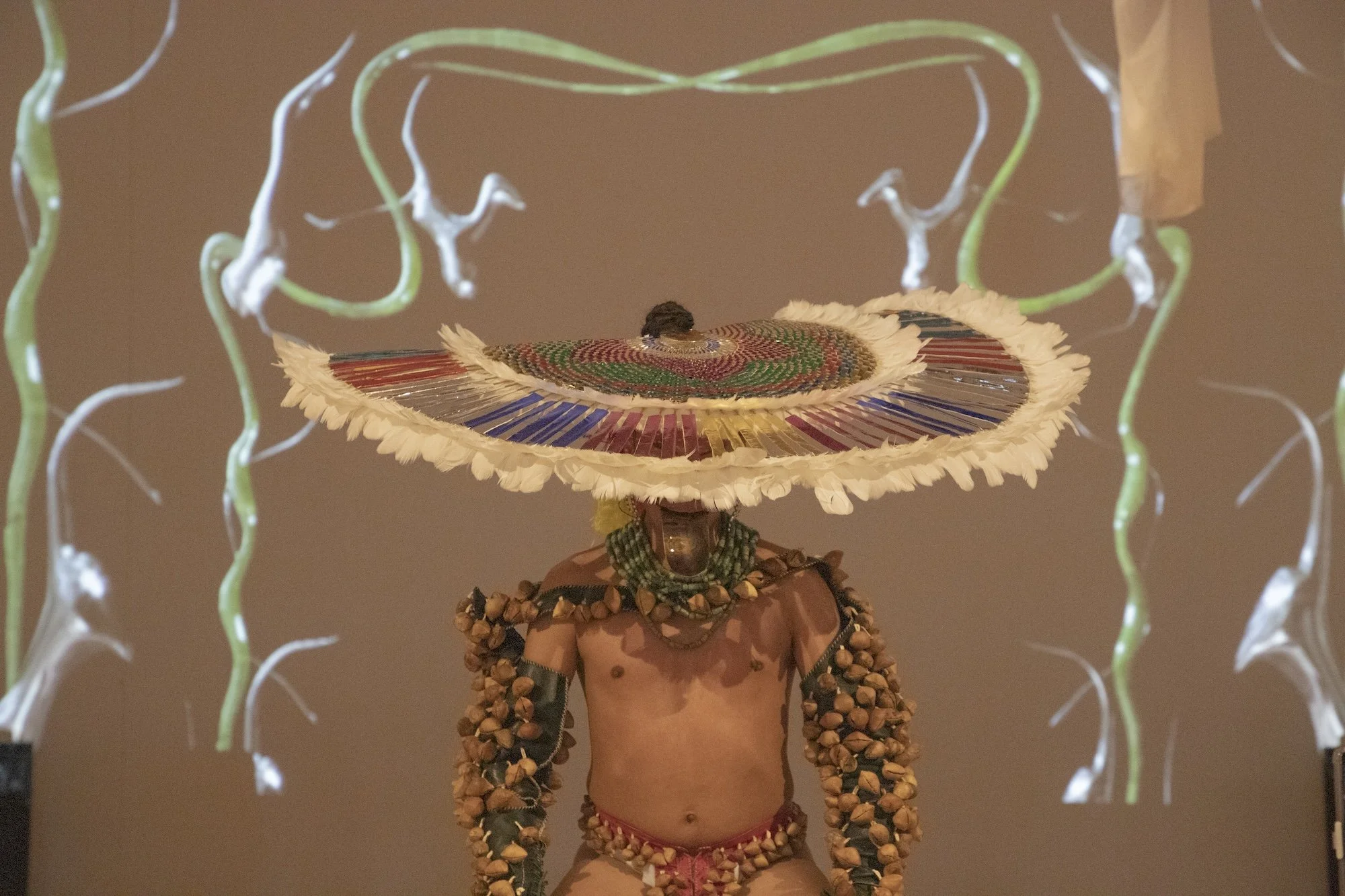
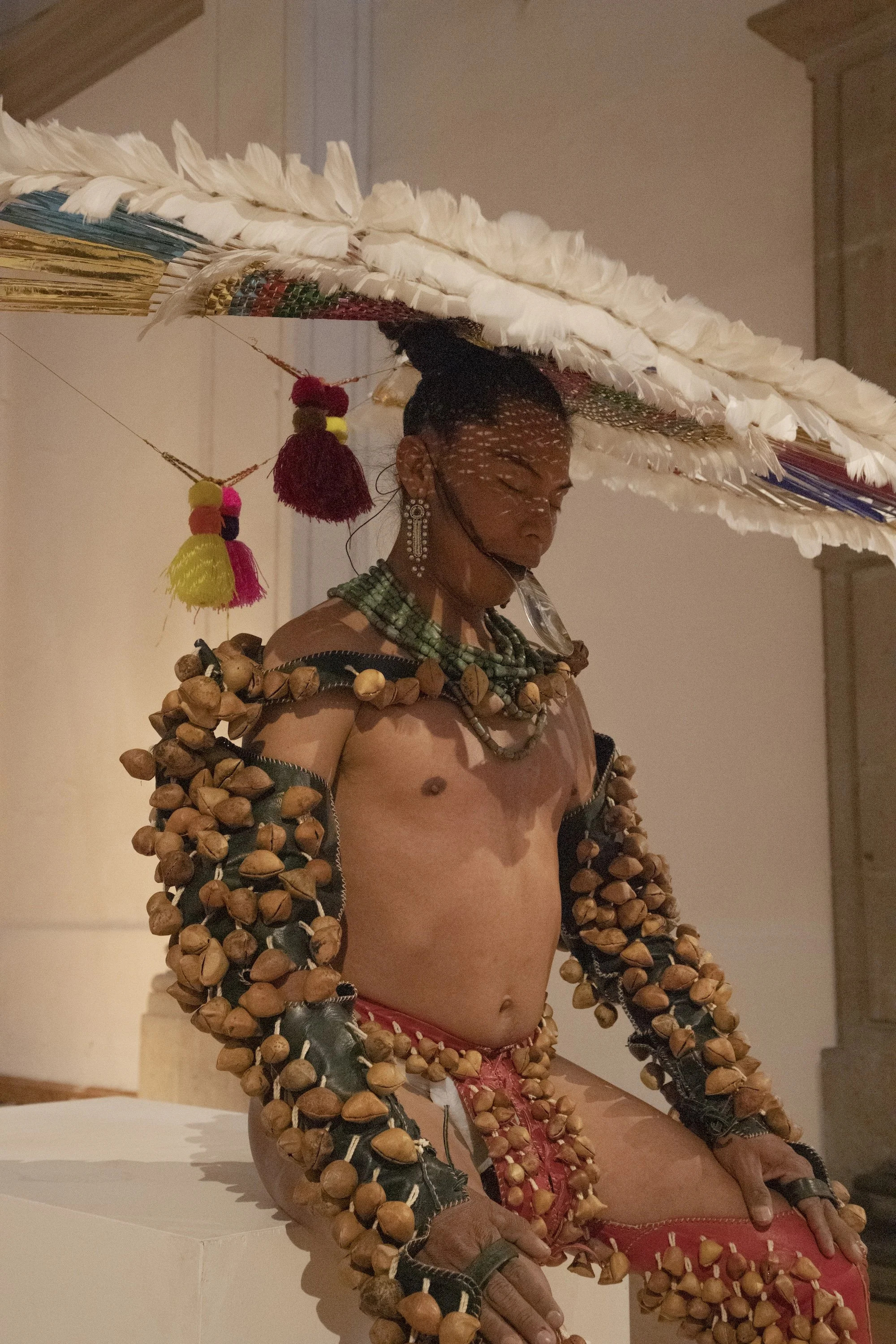
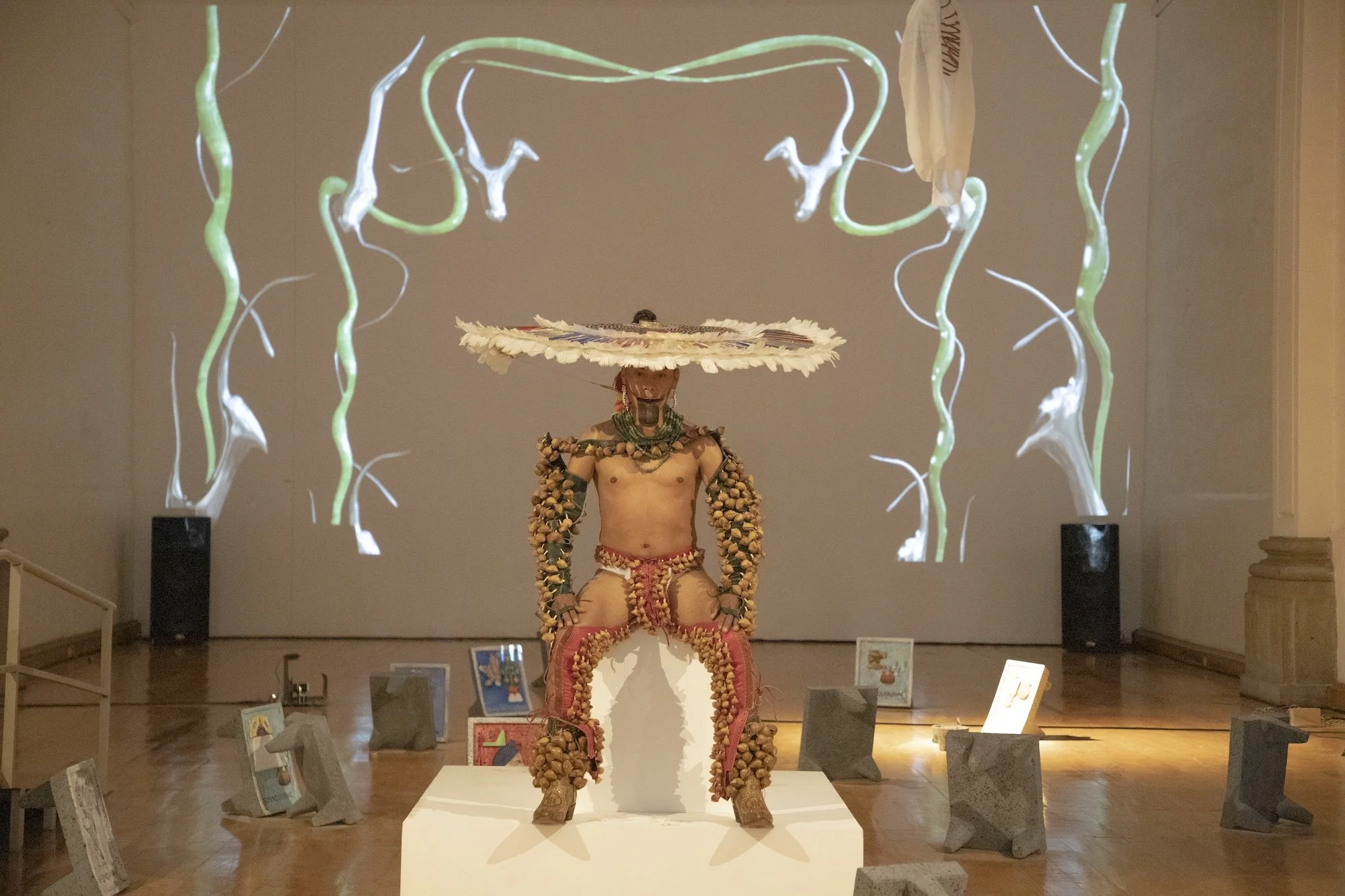
In Zapotec culture, a muxhe is often described as a man who embraces roles traditionally associated with women, though this identity exists outside Western gender binaries. Lukas Avendaño describes muxeidad as a third gender, a category that disrupts colonial frameworks of sex and gender. This is the ground from which Bardaje rises, a performance in which Avendaño moves in attire embroidered with ayoyotes, ancestral musical seeds that rattle with each step, and a large, colourful headdress.
Bardaje explores Avendaño’s reflection on muxeidad, sexuality and the tensions that exist around it. The work invites us into a sensorial encounter with the archaeology of memory and matrilineality, where feathers, metallic paper, ayoyotl, gold and silver become the sacred and profane tools of resistance.
Access Notes
This performance will be Audio Described by Jonathan Penny via headsets. A Touch Tour is available at 19:45. AD headsets can be reserved at point of booking. Details on the Touch Tour will be emailed to anyone booking Audio Description.
Sensory Notes:
Sudden Loud Noises
Language: Spanish with written translation in English.
Venue and Seating:
St Ninians Church (Ground Floor). Wheelchair accessible. St Ninians venue access information.
Seating: One level fixed wooden church pew seating.
Visit our Festival Access Page.
Audio Description Pre-show Audio Notes
Listen below for Audio Described notes that detail what audiences can expect in the show, these notes will give a little context to the work, as well as detailed information on what the performance space looks like as well as the artist’s attire.
Content Notes
Contextual references to colonialism and imposed colonial frameworks of hetronormative gender and sexuality
Artist Bio
Lukas Avendaño is a performance artist, choreographer and anthropologist from the Isthmus of Tehuantepec, Oaxaca, Mexico. He works on the intersection between gender, ethnicity, race, body and violence in Mexico through performance, intervention and activism in communities. His performance work explores roots and experiences, such as muxes identity and gender roles.
In Avendaño’s words, “it is an invitation for the audience to become sensitive to the symbols and signs around them—those that flow through our everyday lives, in each moment. We just have to find the connection to that ancestral thought; only then does a new epistemology emerge—one that redefines how we understand and live life.”
Lukas has also used his platform as an activist to bring attention to the crisis of enforced disappearances in Mexico, a phenomenon that has affected approximately 110,000 people to date, including his brother Bruno.
Credits
Original idea, investigation and design by Lukas Avendaño